
 Image 1 of 1
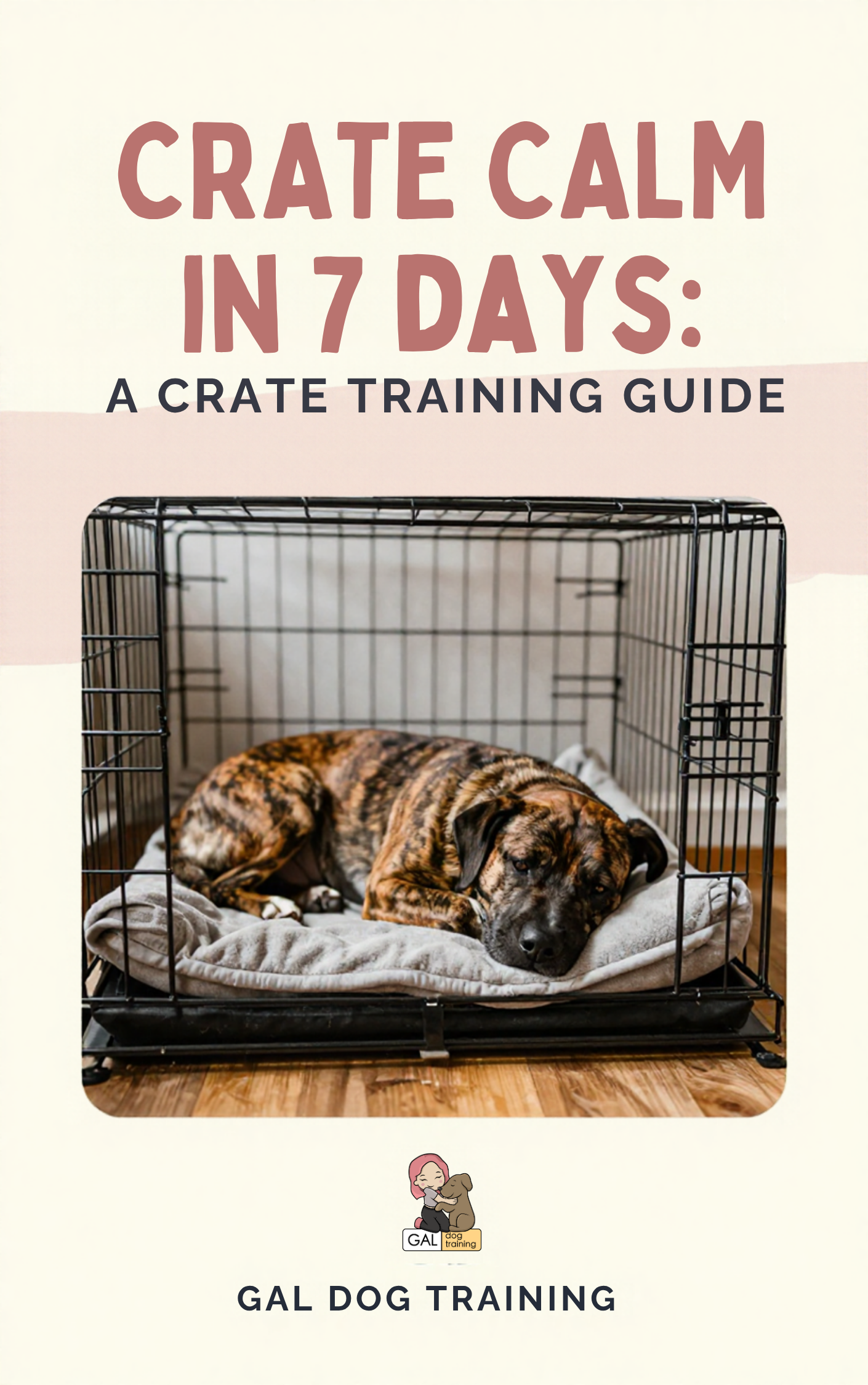
Crate Calm in 7 Days: A Crate Training Guide
$5.00
Helping your dog feel comfortable in a crate is a process built on trust, patience, and small wins. This guide gives you a clear seven-day progression to create a calmer crate experience, whether your dog is brand new to crate training or has had a difficult past experience. You’ll learn how to build comfort gradually, recognize readiness, and adjust the pace around your dog’s needs. The goal is not to rush toward a deadline, but to help your dog feel safe enough to choose to feel calm in their crate. What the guide helps you build
Includes a video example for each step so you can see exactly what to do!
Comfort — create a crate space that feels inviting, familiar, and pressure-free.
Calm settling — reward relaxed behavior so your dog can learn that crate time is safe.
Voluntary re-entry — encourage your dog to return to the crate by choice, rather than being placed inside. Useful skills — introduce lying down and the “go crate” cue in a way your dog can understand.
Everyday confidence — gradually practice a closed door, owner movement, and brief out of-sight periods.
Dog-led by design
Your dog’s comfort sets the pace. If you notice whining, crying, barking, pawing, or any other sign of discomfort, pause, return to an easier step, or slow down. Never force your dog into the crate
7 days is a framework, not a guarantee. Every dog learns at a different pace, and full crate training may take longer than seven days. Dogs with negative crate associations may need extra time, more repetition, and a slower progression. The most important measure of success is growing comfort, not completing the calendar.
